احدث المقالات
Is Information Technology Specialization Difficult? Studies & Careers

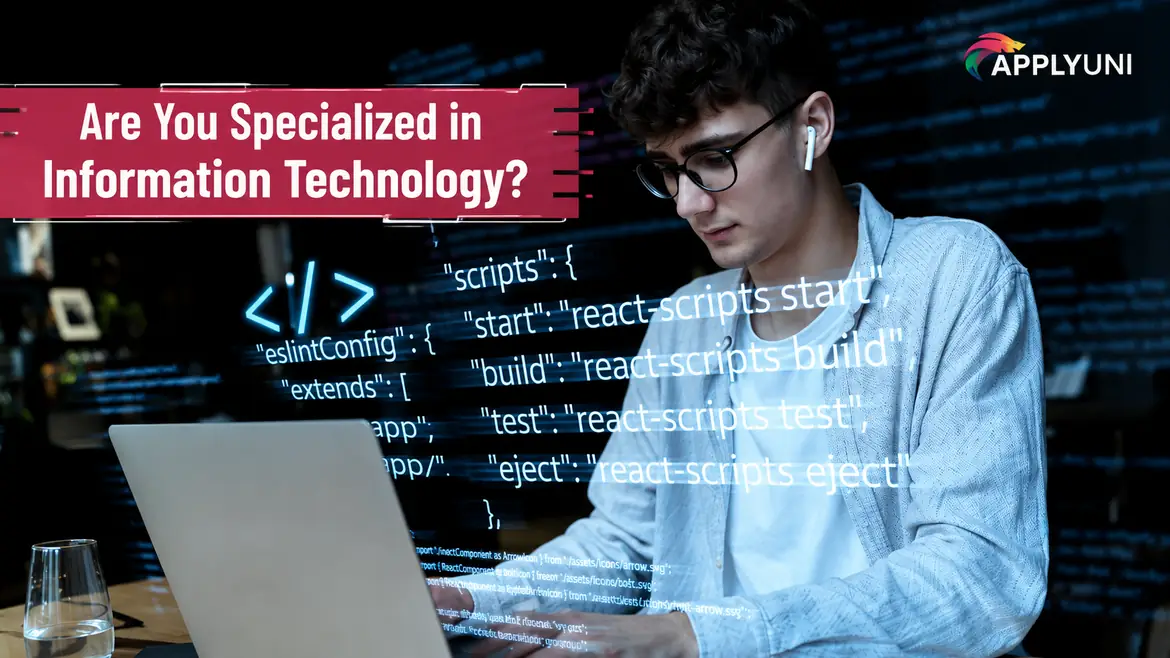
Is Information Technology Specialization Difficult? A question that occupies the mind of every student thinking about entering this promising field. The truth is that difficulty is relative and depends on your passion and preparedness. In this comprehensive guide, we will reveal everything you need to know about studying information technology in Malaysia: from admission requirements, study duration, career opportunities, to how to register easily. Get ready to discover your tech future!
Is Information Technology Specialization Difficult?
The difficulty of information technology depends greatly on the student’s preparedness, ability, and passion for the specialization they choose.
Difficulty can be analyzed from several angles:
The specialization requires a strong foundation in logical thinking and problem-solving — skills that can be developed through continuous practice:
- Programming and logical thinking: a large part of the specialization focuses on learning programming languages and applying algorithms. Students with a natural inclination for analysis and logical thinking find this part enjoyable and motivating, while others need to put in extra effort in practical training.
- Mathematics: information technology is less dependent on advanced mathematics compared to computer science, but it requires a good understanding of concepts such as boolean algebra and statistics, which are necessary for understanding algorithms and data analysis.
The dynamic nature of the specialization:
The real difficulty in information technology does not lie in the curriculum itself, but in the changing nature and rapid evolution of the field:
- Continuous learning: the student must be prepared for self-directed and continuous learning throughout their career, to keep up with constantly evolving technology and continuously develop skills
- The practical side: the specialization relies heavily on practical application, such as writing code, debugging, and implementing practical projects. This experience is essential for mastering skills and turning theoretical knowledge into practical expertise
Now we have answered your question about whether information technology is hard. Let us continue with the rest of the questions on your mind.
Does Information Technology Require Strong Programming and Mathematics?
When we talk about studying information technology, the most important question in every student’s mind entering this field remains: does it require me to be strong in programming and mathematics?
The short answer: you do not need to be a math genius or a professional programmer before you start. But let me clarify the picture more precisely.
- Programming in IT: programming is a fundamental part of the specialization, but it is not as difficult as you imagine. You will learn programming languages gradually throughout your studies, and what matters most is having logical thinking and a love of problem-solving. If you have the passion and readiness for continuous practical training, you will find yourself mastering programming smoothly.
- Mathematics in IT: the good news is that information technology is less dependent on complex mathematics compared to specializations like computer science. You will need to understand basics such as boolean algebra and simple statistics — concepts any student can easily grasp.
What Are the Requirements for Information Technology?
Before you decide to join information technology, it is important to know the basic requirements you need for success in this field:
Academic requirements: to obtain a bachelor’s degree in information technology, you will need to successfully complete 128 credit hours, maintaining a minimum cumulative GPA of 2.00 out of 5.00. These hours include specialization requirements of approximately 60 credit units.
Required personal skills: what most distinguishes a successful student in this specialization is having a strong ability to solve problems. This skill will be your greatest asset throughout your academic and professional journey.
Job market requirements: the student is required to prepare a research report on the latest job market requirements in information technology, ensuring the link between academic study and practical reality.
How Many Years Is Information Technology?
If you are wondering about the time required to complete information technology studies, the answer is clear and straightforward:
Bachelor’s degree: the duration of a bachelor’s degree in information technology is 4 academic years at most universities, divided into 8 semesters. During this period, you will study between 130-132 credit hours distributed across approximately 42 courses.
Intensive programs: some private universities in Malaysia may offer intensive programs lasting only 3 years.
Postgraduate studies: if you want to continue your studies to obtain a master’s or doctorate degree, you will need additional years after your bachelor’s.
IT vs Computer Science – What’s the Difference
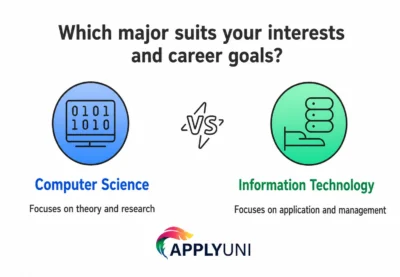
computer science vs information technology
Computer science is the theoretical foundation that creates technology, while information technology is the practical side that applies and manages this technology. Both are important specializations and complement each other, but a computer science graduate tends to work in research and development, while an information technology graduate tends to work in management, support, and operations within organizations.
- Computer Science (CS): focuses on the theoretical and mathematical side of computing, such as algorithm design, computing theory, and complex programming. Example jobs: researcher, algorithm developer, software engineer focused on building new systems.
- Information Technology (IT): focuses on the practical and applied side, such as managing information systems, network maintenance, cybersecurity, and meeting user and business needs. Example jobs: systems administrator, cybersecurity specialist, systems analyst, network administrator, technical consultant.
In short, computer science is concerned with how things work, and information technology is concerned with how we use and apply things.
What Are the Most In-Demand Skills for IT Graduates in the Malaysian Job Market?
The Malaysian job market is seeing increasing demand for the following skills:
- Cybersecurity: to protect the digital infrastructure of companies
- Data Analytics and Artificial Intelligence: to extract insights and make strategic decisions
- Web and App Development: especially developers who master modern workflows
- Cloud Computing: such as AWS, Azure, and Google Cloud services
What Job Opportunities Are Available for IT Graduates in Malaysia?
Job opportunities are very numerous in Malaysia, and include roles in large local and international companies that use Malaysia as their regional headquarters.
Among the Most Notable Roles:
- Systems Analyst
- Software Engineer
- Database Administrator
- Cybersecurity Specialist
- Web and mobile application developer
- IT Consultant
How to Study Information Technology in Malaysia
If you dream of studying information technology in Malaysia, you are in the right place! At ApplyUni we make your study journey easy and hassle-free.
- University admission to the best Malaysian universities offering information technology
- Student visa with ease
- Suitable accommodation
- Reception and assistance from the moment you arrive
Simple steps to get started:
- Contact our experts for a free consultation
- Choose the right university and program
- Submit your application now through our website
- Let us handle all the details from admission to travel
Conclusion
The answer to the question: Is Information Technology Specialization Difficult in Malaysia?
The specialization is relatively difficult as we mentioned at the beginning of the article, because it depends on the student’s own abilities, but it is a rewarding and future-oriented field. The difficulty does not lie in the academic material itself, but in the need to commit to continuous learning and the practical application of acquired skills.
The educational environment in Malaysia, with its quality and diversity, provides an excellent platform for acquiring these skills, especially in in-demand specializations such as cybersecurity and artificial intelligence. If you have a passion for technology and the ability for logical thinking, this specialization in Malaysia opens wide and future-oriented career horizons for you.
Frequently Asked Questions
How long is the information technology program?
The duration of a bachelor’s degree in information technology is 4 academic years (8 semesters) at most universities, involving the completion of 130 credit hours distributed across theoretical and practical courses.
What is the difference between information technology and computer science?
Information technology focuses on managing and maintaining technological systems, infrastructure, and information processing, while computer science focuses on programming and the theoretical aspects of systems development. In short: IT for practical application, and CS for research and development.
Can I study information technology without previous programming experience?
Yes, absolutely! You do not need prior programming experience. You will learn programming gradually during your studies. What matters most is having logical thinking skills, problem-solving ability, and a passion for technology.